Art, Culture & Heritage | September 23, 2026
Why Are Lisbon's Streets Paved Like Works of Art?
The story of the calçada portuguesa beneath the city's feet
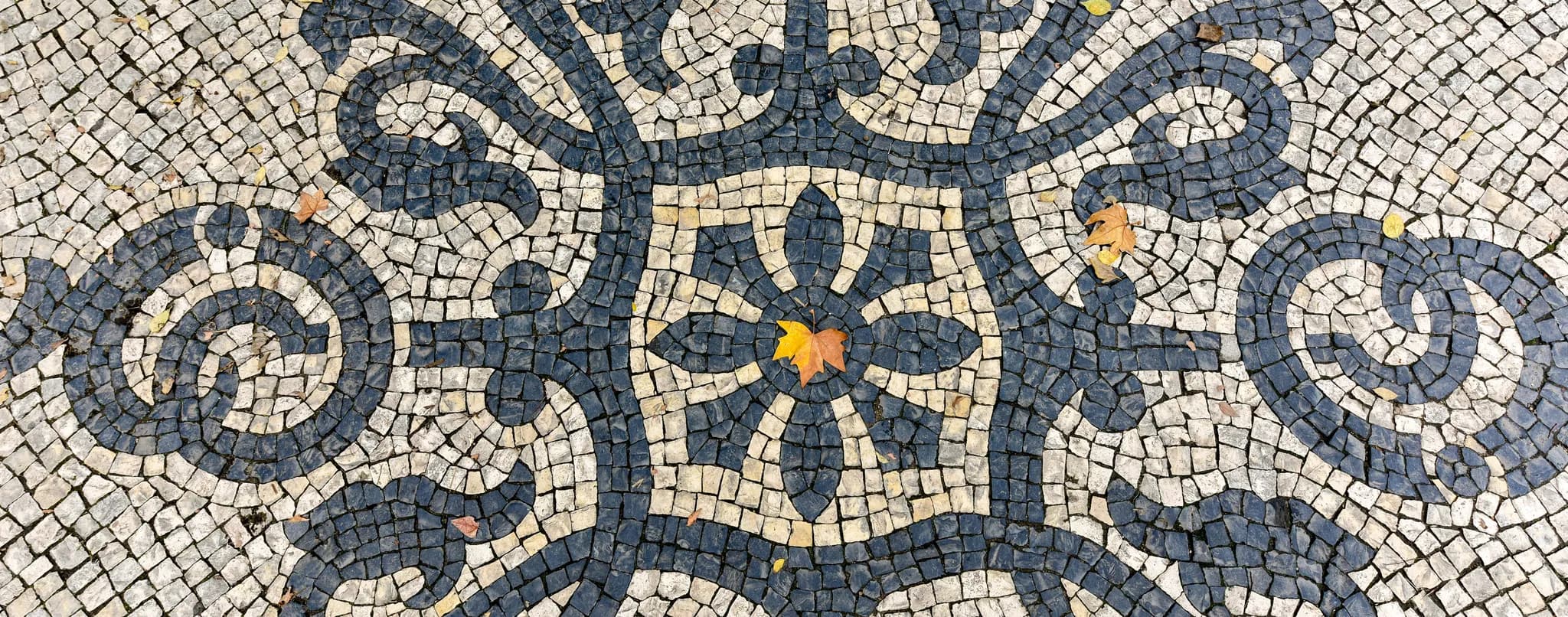
In Lisbon, some of the city's most memorable works of art are underfoot. Waves, flowers, ships, animals, and geometric forms appear across pavements and squares, created from thousands of small pieces of light and dark stone.
This is calçada portuguesa, a traditional paving craft that gives Lisbon's streets their distinctive graphic identity. It is practical, decorative, and closely tied to the people who still shape and maintain it by hand.
From practical paving to urban art
Stone paving existed in Portugal long before the nineteenth century, but Lisbon developed the decorative form recognised today. In 1842, military engineer Eusébio Cândido Pinheiro Furtado directed an experimental zigzag pavement inside São Jorge Castle. The design attracted attention and soon moved from an enclosed setting into the city’s public spaces.
Work began in Rossio Square in 1848 on a much larger black-and-white wave pattern known as Mar Largo, or Broad Sea. Its flowing lines recalled the ocean and helped establish decorative pavement as part of Lisbon's visual language. Similar designs then spread through the capital, across Portugal, and to places connected with Portuguese culture.
How calçada portuguesa is made
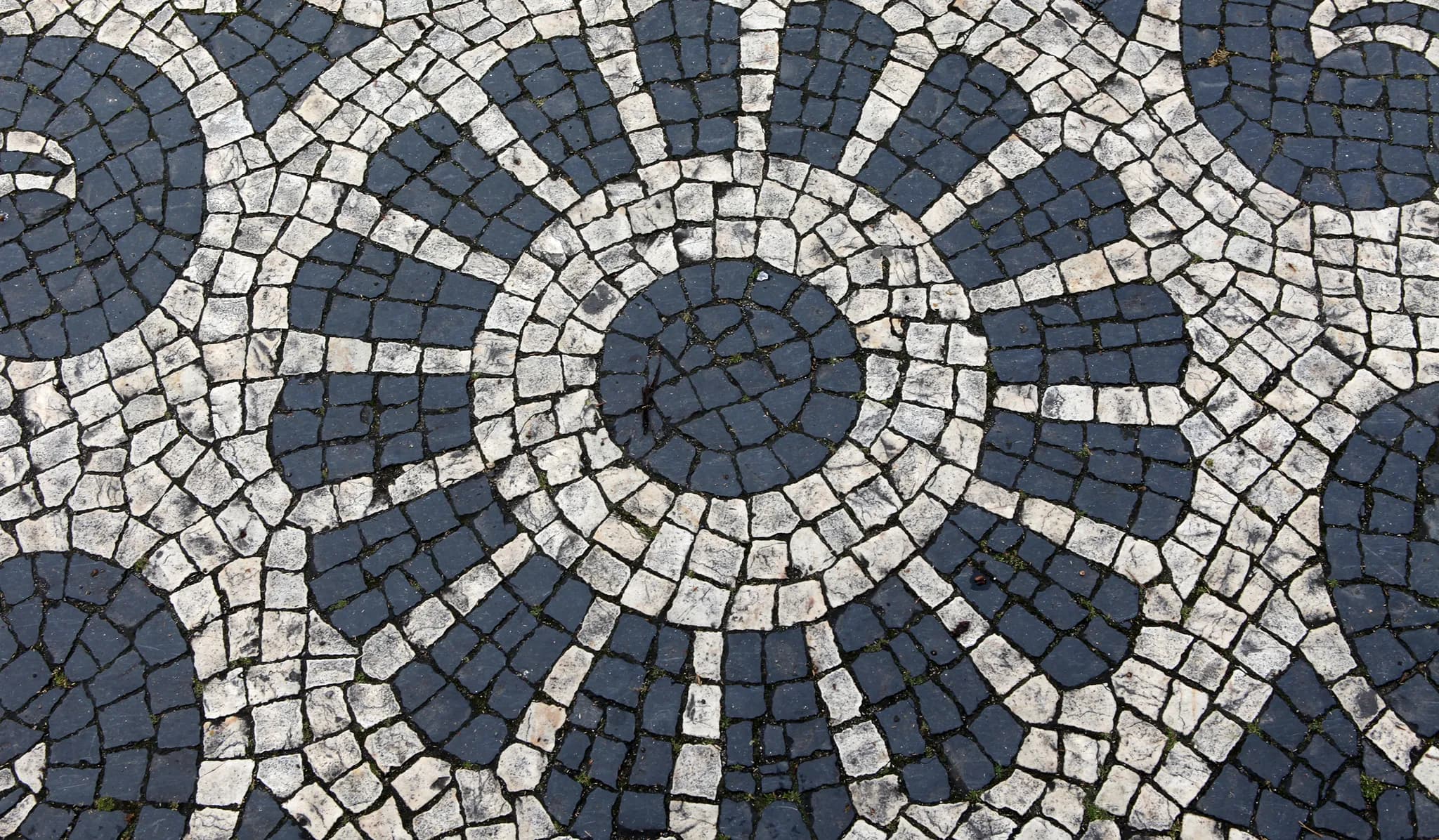
The craft depends on the calceteiro, the specialist who cuts and lays each stone. Traditionally, pale limestone is combined with basalt or dark limestone. The pieces are shaped with a hammer, fitted closely into a prepared bed of sand, and arranged according to a pattern or template.
Small differences in shape matter. The stones must follow curves, fill gaps, and create a level surface while preserving the design. Even a simple border requires judgement and physical skill; a detailed figurative image demands the precision of a mosaicist working at street scale.
A city that communicates through patterns
The pavements are more than decoration. Their motifs often refer to the sea, navigation, local flora, civic symbols, or the character of a particular neighbourhood.
At Rossio, the famous waves seem to move as people cross the square. Along Avenida da Liberdade, ornamental patterns form long stone carpets beneath the trees. Chiado, Cais do Sodré, Belém, and Parque das Nações reveal further variations, from historic compositions to contemporary designs.
The limited palette is part of the effect. With little or no added colour, contrast and geometry create movement, depth, and rhythm across large public spaces.
A living craft that needs skilled hands
Portuguese pavement remains a working urban surface, so it must be repaired as streets change and stones wear. The knowledge involved has traditionally passed from experienced calceteiros to apprentices.
In 2021, the art and know-how of calçada portuguesa entered Portugal's National Inventory of Intangible Cultural Heritage, which also recognised the need to protect a craft with fewer active specialists. Looking down in Lisbon therefore reveals two stories at once: the design itself and the manual knowledge required to keep it alive.
Lisbon design for MICE experiences
For incentive and corporate groups, Portuguese pavement can become the connecting theme of an urban experience. A guided design walk can link Rossio, Avenida da Liberdade, Chiado, and the riverfront, while an expert explanation or craft demonstration can show how the patterns move from paper to stone.
With our own local offices and teams across Spain and Portugal, Cititravel turns local culture into distinctive MICE experiences. Planning an incentive, meeting, or corporate event in Lisbon? As a local DMC, we can create a tailor-made programme that connects your group with the city's design, heritage, and people.