Destinations | September 22, 2026
Why Are Some of Tenerife's Beaches Black?
What the island's coastline reveals about its volcanic origins
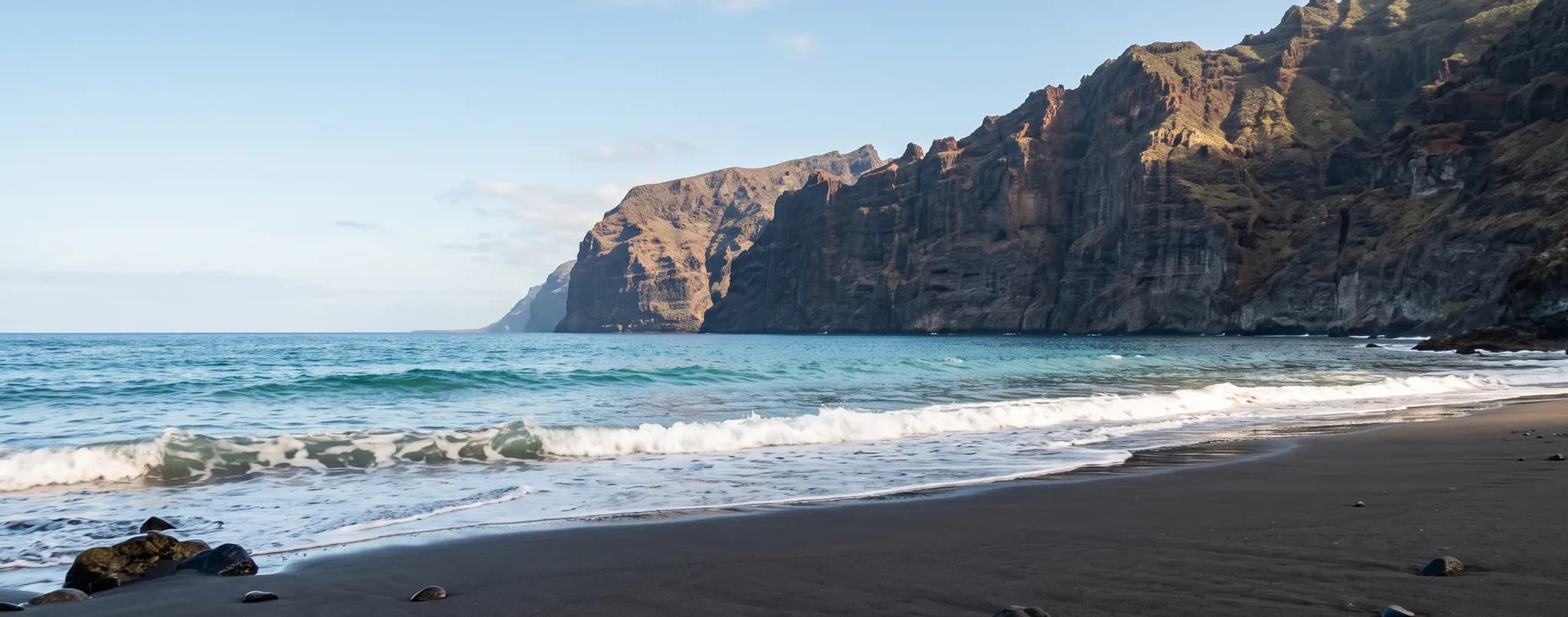
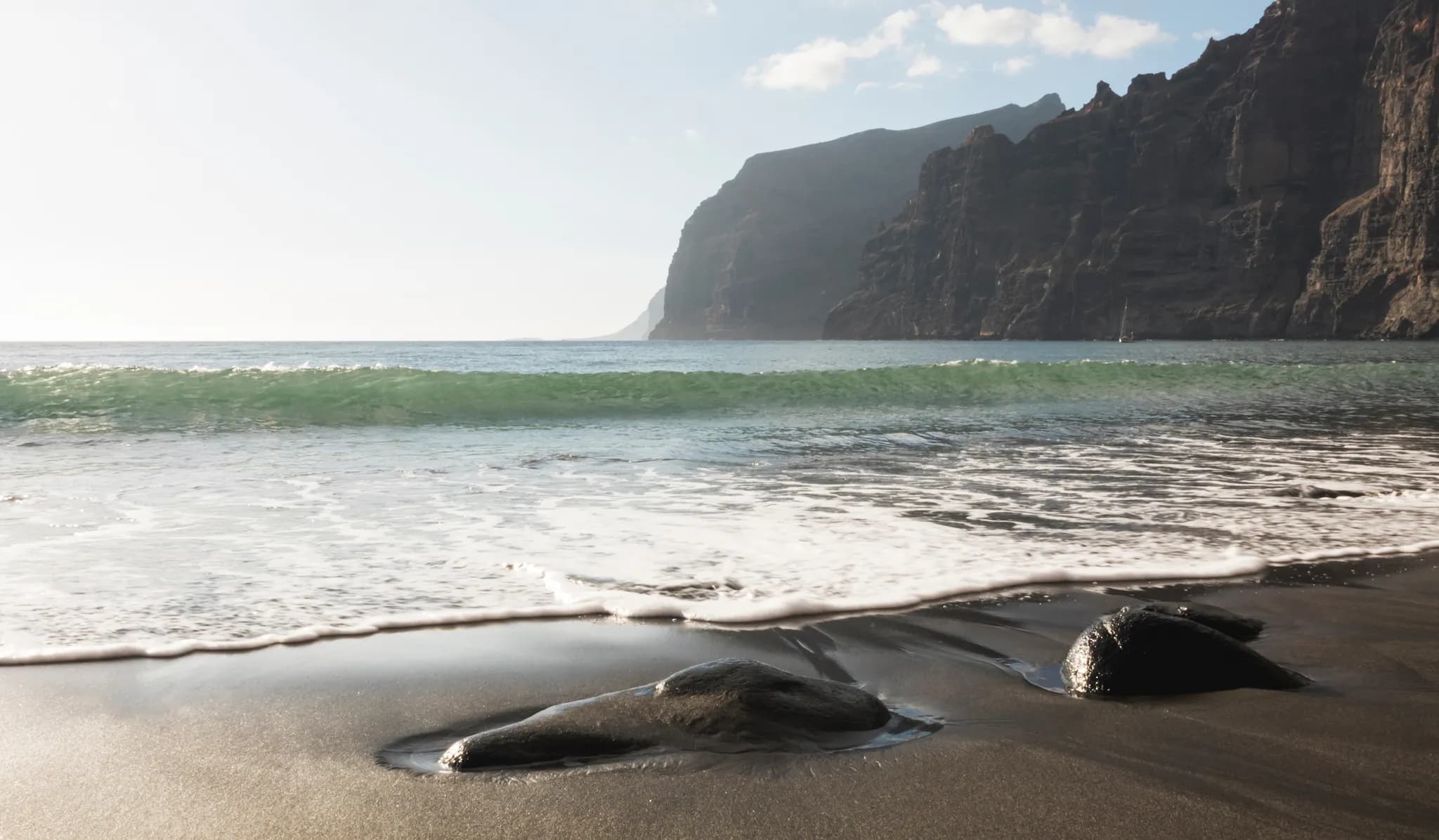
Tenerife's black sand beaches can look almost unreal: dark shorelines meeting the blue Atlantic, often beneath steep cliffs or volcanic slopes. Their colour is not caused by pollution or ordinary sand becoming darker over time. It comes directly from the rock that formed the island.
Each grain is a small part of Tenerife's volcanic history, shaped by fire, water, and erosion before reaching the shore.
An island born from volcanic activity
Tenerife was built by successive volcanic eruptions over millions of years. Lava cooled into dark volcanic rock, much of it basalt, across the island and along its coast. The Teide complex is the most visible expression of that history, but volcanic materials also shape cliffs, valleys, natural pools, and beaches far from the summit.
That geological origin explains why dark sand appears so naturally around Tenerife. On an island made largely from volcanic rock, the coast produces a very different palette from beaches formed mainly from pale quartz or coral fragments.
How volcanic rock becomes beach sand
Black sand can form in more than one way. When hot lava reaches the sea, rapid cooling may fracture it into pieces. Waves then break those fragments down further and move them along the coast. Elsewhere, the sea, rain, and wind gradually erode older lava flows and volcanic cliffs. The loose grains collect where currents and the shape of the shoreline allow a beach to develop.
The result is a mixture of small volcanic particles whose dark minerals give the sand its charcoal, grey, or nearly black appearance. The process continues today as waves reshape the coastline and redistribute sediment from one season to another.
Why Tenerife also has golden beaches
Not every beach on the island is black. Sand colour depends on the material available locally, coastal currents, human intervention, and the way each bay retains sediment.
Las Teresitas, near Santa Cruz, is the best-known contrast. The former volcanic shoreline was transformed in the early 1970s with golden sand brought from the Sahara, creating the light-coloured beach seen today.
This contrast makes Tenerife particularly interesting: within one destination, visitors can see natural black volcanic beaches, mixed grey shores, and carefully created golden stretches.
Where to see Tenerife's black sand
Benijo, framed by the Anaga landscape, is one of the island's most recognisable dark beaches. El Bollullo offers a wilder view of the volcanic coast, while Playa Jardín in Puerto de la Cruz combines black sand with gardens and promenades designed by Canarian artist César Manrique. Playa de la Arena provides another clear example on the island's western coast.
Dark sand absorbs heat quickly, so it can become very hot under strong sun. It is part of the beach's natural character, together with changing Atlantic conditions that should always be respected.
A volcanic story for MICE programmes
For an incentive or corporate group, Tenerife's black beaches offer more than a striking photograph. A programme can connect a guided volcanic route, the landscapes of Teide, coastal viewpoints, and local gastronomy to explain how geology has influenced life across the island.
With our own local offices and teams across Spain and Portugal, Cititravel turns destination knowledge into distinctive MICE experiences. Planning an incentive, meeting, or corporate event in Tenerife? As a local DMC, we can create a tailor-made programme that connects your group with the island's volcanic landscapes, culture, and people.