Culture & Gastronomy | September 16, 2026
How Much Do You Know About Paella?
From Valencia's Rice Fields to the World
Few dishes evoke Spain as instantly as paella. Yet its story begins far from restaurant menus, in the rice fields and vegetable gardens surrounding Valencia. What started as a practical rural meal gradually became one of the world's best-known symbols of Spanish gastronomy.
Where paella began
Paella had no single inventor. It developed over time in the countryside around Valencia, especially near the Albufera, whose wetlands provided ideal conditions for growing rice. Rice cultivation became firmly established in eastern Spain during the period of Al-Andalus, supported by advanced irrigation systems. Farmers and rural workers cooked rice outdoors in a wide metal pan, adding ingredients available nearby. These could include rabbit, chicken, local beans, tomato, snails, or duck. The result was filling, affordable, and easy to share. Written references to Valencian rice dishes became more common during the 18th and 19th centuries, when the recipe began to take the form recognised today.
The dish and the pan share a name
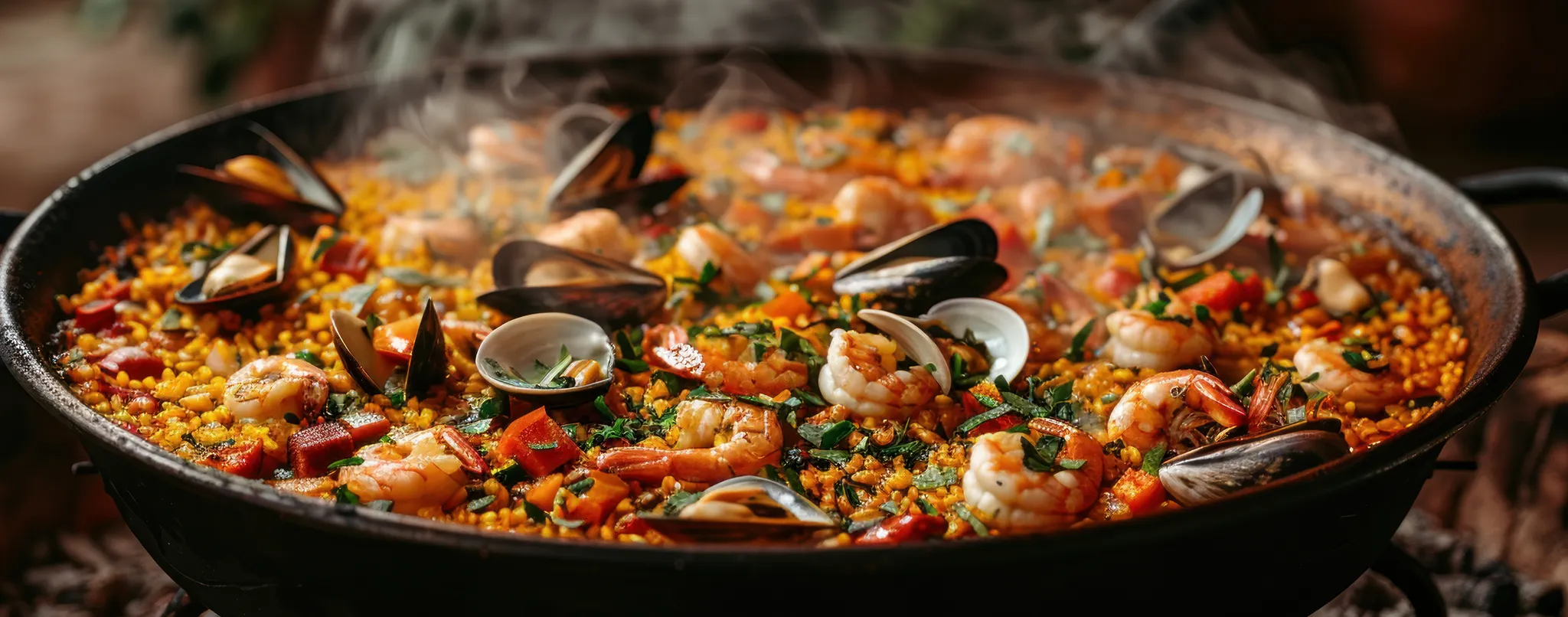
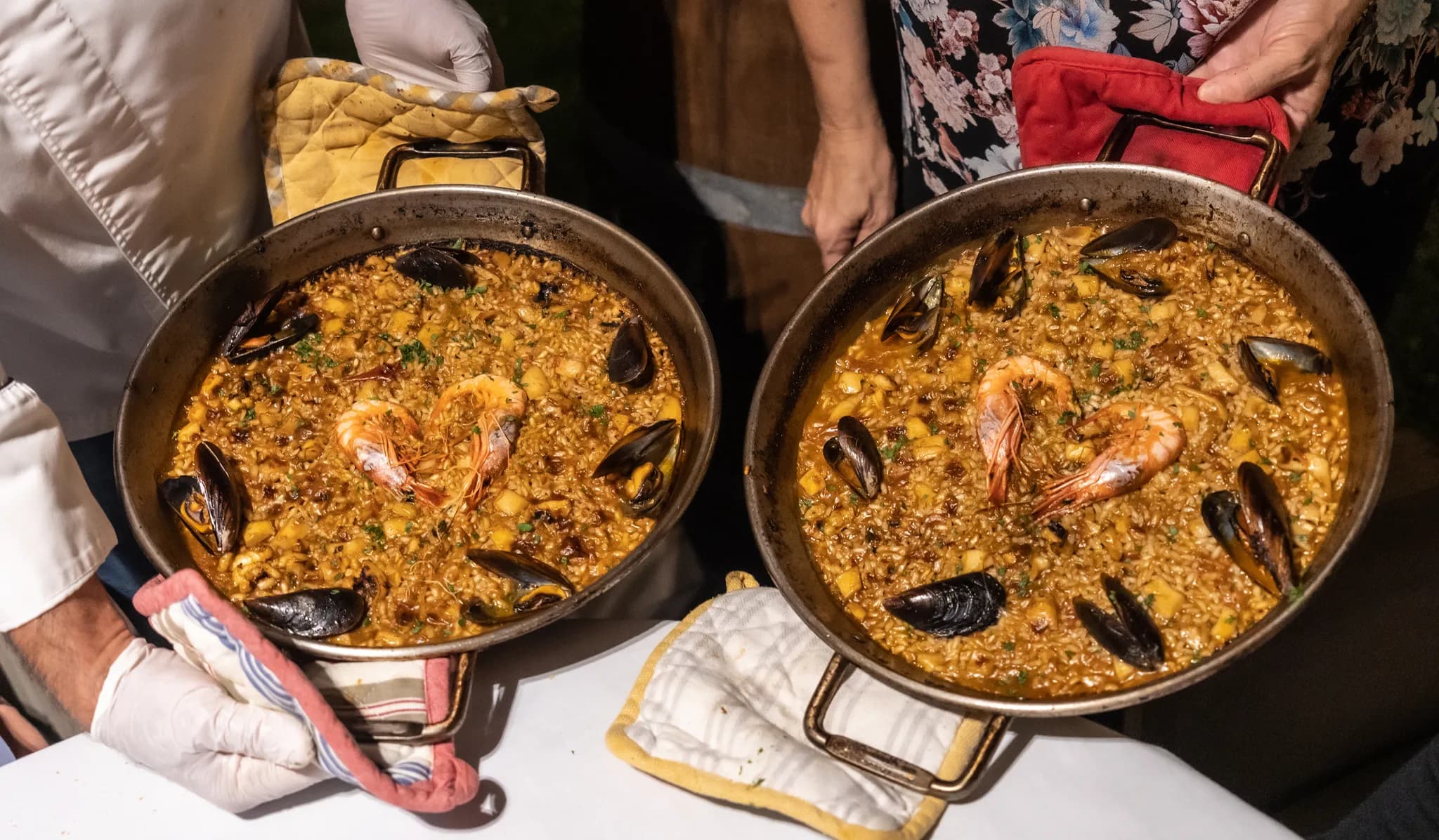
In Valencian, "paella" means "pan", a word connected to the Latin patella. The broad, shallow shape allows the rice to cook in a thin layer, absorb the stock evenly, and remain separate. At the bottom, skilled cooks aim for the socarrat, the delicate toasted layer prized for its flavour and texture.
Traditional paella valenciana usually contains round-grain rice, chicken, rabbit, flat green beans, garrofo, tomato, olive oil, water, saffron, and salt. Rosemary or snails may also appear. Seafood, vegetable, and mixed paellas are later interpretations, while the Valencian recipe remains closely tied to its place of origin.
How paella travelled beyond Valencia
During the 19th century, paella moved from the countryside to celebrations and public events across Spain. Its international popularity grew further with the tourism boom of the 20th century. As the dish travelled, cooks adapted it to local ingredients and tastes.
Today, paella appears on menus around the world and is celebrated every 20 September on World Paella Day.
Five facts about paella
- "Paella" can name both the dish and the pan. In Valencian, the cooking vessel is traditionally called a "paella", although "paellera" is also correct and widely used in Spanish.
- A thin layer matters. The pan is designed to spread the rice widely rather than deeply.
- The rice is not continually stirred. This helps the grains remain separate and allows the socarrat to form.
- Seafood is not part of the classic Valencian recipe. It belongs to other popular versions and rice dishes.
- Paella is a social ritual. It is traditionally prepared for sharing with family and friends.
Discovering paella in its place of origin
In Valencia, paella is a direct expression of the region's landscape, produce, and way of gathering. A visit to the Albufera, a conversation with a local cook, or a shared meal prepared over fire can reveal far more than the recipe alone.
With our own local offices and teams across Spain and Portugal, Cititravel turns local knowledge into distinctive MICE experiences. In Valencia, paella can become part of an incentive programme, team-building activity, or corporate event, bringing participants together through one of the destination's most authentic traditions.
Planning an event or incentive in Valencia? As a local DMC, we can create a tailor-made programme that connects your group with the destination through its gastronomy, culture, and people.